test

Anodized Aluminum Labels, Nameplates, and Tags

Top 5 Reasons Anodized Aluminum is Popular for IUID, UID, MIL-STD-130, and Other Tags

Anodized aluminum is the material of choice for IUID, UID, MIL-STD-130, and other tags because it combines durability, versatility, and compliance, making it ideal for marking equipment that must remain legible and secure in demanding environments.

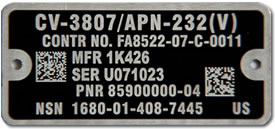
Anodized Aluminum IUID Nameplate with Matte Black Background and Mechanical Fastener Holes
    1. Durability
      The anodized surface is integral to the metal, making the markings resistant to abrasion, and chemicals.
    2. Long-Term Readability
      Laser marking produces permanent, high-contrast characters and data matrix codes that remain readable even after years in harsh environments.
    3. Versatility in Form and Finish
      Anodized aluminum tags can be formed on-site to fit flat or curved surfaces, allowing easy application to a wide range of equipment and components. This flexibility reduces lead time and simplifies installation in the field.
    4. Compliance with Military and Aerospace Standards
      Anodized aluminum meets MIL-STD-130 and other identification requirements for Item Unique Identification (IUID) programs. It is lightweight, corrosion-resistant, and dimensionally stable—ideal for aircraft, defense systems, and industrial assets that must carry traceable, permanent ID markings.
    5. Lightweight Strength
      Delivers strength at a fraction of the weight — essential for aerospace and military applications.

DESIGN YOUR LABEL - SIX EASY STEPS

1. Aluminum Material Types

Our most popular anodized aluminum material is UNS A91100, commonly known as alloy 1100.

Alloy 1100 is:

  • Commercially pure aluminum with excellent corrosion resistance.
  • Compliant with AMS-QQ-A-250/1, which ensures high performance and reliability in critical aerospace and marine applications.
  • Can meet military grade specs for sheets and plates, depending on the exact requirements.

Alloys 6060-T6, 6061-T6, and Other Alloys

Do your label or nameplate specs require a different aluminum alloy? We offer a variety, including alloy 6060-T6, 6061-T6, and others.

Alloys 6060-T6 and 6061-T6 are more durable than 1100 and perform well under stress or vibration. They are ideal for aerospace, defense, and industrial equipment panels or tags that must withstand heavy use and environmental exposure.

  • Alloy 6060-T6 offers excellent corrosion resistance without the added weight of heavier alloys, thanks to its higher aluminum content (97.9-99.3%) and lower magnesium and silicon.
  • Alloy 6061-T6 is a heat-treated, high-strength aluminum used when rigidity and toughness are essential. It contains more alloying elements, such as magnesium (0.8-1.2%) and silicon (0.4-0.8%), plus trace amounts of copper and chromium for added strength.

Contact us for recommendations if your nameplates or labels must withstand unique circumstances.

2. Label and Nameplate Thicknesses

At Jet City Laser, we stock anodized aluminum in a range of thicknesses to suit your labeling and mounting needs: .003″ (0.08 mm), .005″ (0.13 mm), .008″ (0.20 mm), .012″ (0.30 mm), .020″ (0.51 mm), .032″ (0.81 mm), and .063″ (1.60 mm).

  • .003, .005 and .008 inch (0.08, 0.13, 0.20 mm)
    Thin, flexible material that is ideal for adhesive-backed labels or curved surfaces.
  • .012 and .020 inch (0.30, 0.51 mm)
    Medium thickness for standard nameplates and control panels; balances rigidity and light weight.
  • .032 and .063 inch (0.81, 1.60 mm)
    Heavy-gauge material for durable equipment plates, outdoor use, and when using mechanical fasteners.

3. Nameplate and Label Sizes

Whether you need a compact tag for asset tracking or a larger panel for controls, we make it easy to order the right dimensions for your equipment. Simply provide the size, and we will handle the rest.

4. Anodized Coating and Hardness Specifications

Every aluminum label we produce features Type II anodizing for better corrosion resistance and wear performance, and a clean, professional appearance.

We stock popular hardness specs from half-hard (H14) to extra-hard (H19). The designations primarily affect strength, hardness, and formability.

  • H14 – Perfect for general industrial and indoor applications. Balanced strength and formability.
  • H18 – Ideal for outdoor, aerospace, and military environments exposed to harsh handling or frequent cleaning. Highly wear, abrasion, and impact resistant. Maximum strength, but limited formability.
  • H19 – Use for high-performance and critical ID applications requiring long-term readability under stress. Offers maximum rigidity and scratch resistance. More brittle; not intended for bending.

5. Adhesives and Fasteners to Affix Your Anodized Aluminum Nameplates and Labels

Nameplates and labels can be securely attached using high-performance adhesives, mechanical fasteners, or both. Adhesives provide a clean, strong bond for smooth or lightly textured surfaces, while mechanical fasteners, such as screws or rivets ensure a permanent attachment on thicker plates or challenging materials. We can apply adhesive, punch mounting holes (in standard drill bit sizes), or do both to meet your application and installation requirements.

Adhesives

We can apply a variety of high-performance adhesives to meet your application needs. Select based on surface type, thickness, and bonding requirements:
  • 3M 467MP: Thin, smooth adhesive ideal for lightweight nameplates and overlays where minimal thickness is essential.
  • 3M 468MP: Stronger, gap-filling adhesive designed for heavier or textured nameplates that require a durable bond.
  • 3M 9675: Specially formulated for challenging surfaces, including powder-coated metals and low surface energy plastics. Fiber reinforcement makes it perfect for narrow-width rolls and precision die-cut labels.

Tip for Buyers: If you are unsure which adhesive is best for your surface or environment, contact us for recommendations for the most reliable option for long-lasting performance.

Mechanical Fasteners

Mechanical fasteners such as screws, rivets, or bolts provide a permanent, secure attachment for nameplates and labels, even in high-vibration or harsh environments. They are ideal for thicker plates or surfaces where adhesives may not adhere reliably. Fasteners also allow for easy removal and replacement when equipment maintenance or updates are required.

Top Coat - Optional

A clear polyurethane top coat can be applied to your anodized aluminum nameplates and labels for extra scuff resistance and enhanced protection in outdoor or high-wear environments. This coating helps preserve readability and appearance over time, even under frequent handling or exposure to the elements.

6. Nameplate and Label Colors

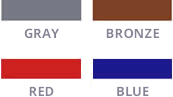
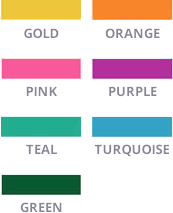
Anodized aluminum nameplates and labels are available in a wide range of matte colors, allowing you to match your equipment, brand, or coding requirements.

Laser or chemical etching produces silver or white text against the selected nameplate or label color. Darker colors provide maximum readability, especially in harsh environments.

In-Stock Colors

Black is the best and most requested choice for IUID labels and barcodes, thanks to its superior machine readability.

Red, blue, and purple are the next most requested colors.

Special Order Colors

Gold, orange, pink, turquoise, teal, and green are available but require a few extra days. Readability will be best (highest) on green. Lighter colors will be lower contrast and may be harder to read, depending on the lighting and viewing distance.

Typical Applications for Anodized Aluminum Tags

Now it’s easy to get precision engraving, fast turnaround, and anodized aluminum tags that meet your performance and compliance requirements.

Contact us today to order or talk with a specialist for recommendations.